Introduction to Animal and Plant De novo Sequencing
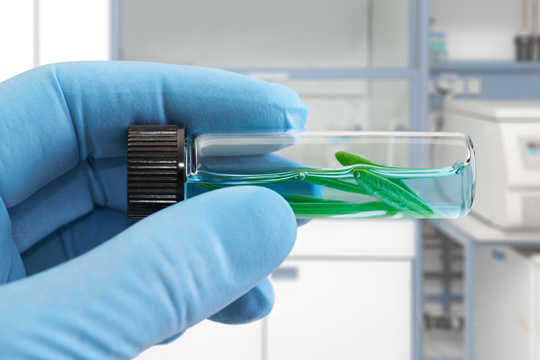

De novo sequencing is the process of sequencing a genome without the use of a reference genome and this can be applied to both plant and animal species that do not yet have a reference quality genome. This approach involves assembling a reference genome by piecing together sequencing reads to construct the entire genome sequence. Animal and Plant de novo sequencing is valuable in fields such as evolutionary biology, agriculture, demographic studies, and mutagenesis studies.
Novogene has extensive experience with Animal and Plant de novo sequencing with a diverse range of species. We provide PAWGS de novo sequencing service using long read sequencing strategies, complemented by short read sequencing data for purposes of genomic survey. Our service is complete with high-quality data, bioinformatics support to assist with genome assembly analysis and “publication-ready“ figures accompanying the analysis.
Applications of Animal and Plant De novo Sequencing
Animal and Plant de novo sequencing has applications in several fields such as:
- Evolutionary biology
- Agriculture research
- Animal breeding research
- Drug screening studies
- Developmental biology
- Veterinary medicine
If you are instead interested in applications requiring resequencing of plant and animal species, please refer here.
Benefits of Novogene’s Animal and Plant De novo sequencing service
- Extensive Experience: Novogene has extensive experience with assembling reference quality genomes for a wide range of plant and animal species using Animal and Plant de novo sequencing.
- High-Quality Data: We deliver high-quality sequencing data that meets leading industry standards and contig N50 lengths appropriate for genome assembly.
- Short Read and Long Read Sequencing: Novogene offers you with the option of carrying out de novo sequencing of plant and animal samples with long read sequencing strategies, complemented by short read data for purposes of genomic survey.
- Bioinformatics Support: We provide comprehensive bioinformatics support to generate de novo assembled reference genomes using long read sequencing data complemented by short read sequencing data. Ultra-long ONT sequencing data can be used to generate telomere-to-telomere (T2T) zero-gap level genomes. Supplementing de novo analysis with Hi-C sequencing data from pre-made libraries can be leveraged to obtain chromosome-level genome assembly.
- Fast Turnaround Times: Our sequencing labs are located near you, in Germany and the UK, allowing for reduced shipping times. With our large sequencing capacity, automated and streamlined workflows, we ensure that you receive your data promptly without compromising on data quality.
- Customer Service System (CSS): Novogene’s Customer Self Service System (CSS) is an online project management portal that streamlines project management and provides direct access to all your sequencing projects in one place. You can view your sequencing project(s), track their progress, access reports, collaborate with your team members, and obtain other useful information at one place.
Animal and Plant De novo Sequencing Specifications: DNA Sample Requirements
Illumina
| Service | Sample Type | Amount (Qubit®) | Volume | Concentration | Purity(NanoDrop™/Agarose Gel) |
| Plant & Animal de novo sequencing(350 bp insert size) | Genomic DNA | ≥100 ng | ≥20 μL | ≥5 ng/μL | OD260/280 = 1.8-2.0; no degradation, no contamination Fragments longer than 1000 bp |
| PCR-freePlant & Animal de novo sequencing(350 bp insert size) | Genomic DNA | ≥1.2 μg | ≥20 μL | ≥20 ng/μL | OD260/280 = 1.8-2.0; no degradation, no contamination |
| PCR-freePlant & Animal de novo sequencing(custom size, ≤500 bp) | Genomic DNA | ≥2 μg | ≥20 μL | ≥30 ng/μL |
PacBio
| Service | Sample Type | Amount (Qubit®) | Volume | Concentration | Purity |
| PacBio DNA HiFi library | HMW* genomic DNA (Plant & Animal) | ≥5 μg | ≥50 μL | ≥70 ng/μL | OD260/280=1.75~2.0; OD260/230=1.5~2.6; NC/QC* =1.00~2.20 Fragments should be ≥30K |
*HMW = High Molecular Weight; NC/QC = NanoDrop concentration/Qubit concentration
ONT
| Service | Sample Type | Amount (Qubit®) | Volume | Concentration | Purity |
| Nanopore PromethION DNA library | HMW* genomic DNA (Plant & Animal) | ≥8 μg | ≥50 μL | ≥100 ng/μL | OD260/280=1.75~2.0; OD260/230=1.4~2.6; NC/QC*=0.95~3.00 Fragments should be ≥30K |
*HMW = High Molecular Weight; NC/QC = NanoDrop concentration/Qubit concentration
Novogene Workflow of Animal and Plant De novo Service
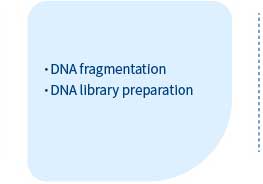
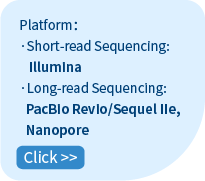
From sample preparation library preparation, short and long-read sequencing, and data quality control, to bioinformatics analysis, Novogene provides high-quality products and professional services. Each step is performed in agreement with a high scientific standard and meticulous design to ensure high-quality research results.

Featured Publications of Animal and Plant De novo Sequencing
-
NUCLEIC ACIDS RESEARCHIssue Date: 5 January 2024IF: 14.9DOI: 10.1093/nar/gkad1250
-
Plants People PlanetIssue Date: 21 February 2023IF: 5.695DOI: 10.1002/ppp3.10366
-
Sex-biased gene content is associated with sex chromosome turnover in Danaini butterflies
MOLECULAR ECOLOGYIssue Date: 5 January 2024IF: 4.9DOI: 10.1111/mec.17256
-
The role of repetitive sequences in re-patterning of major rDNA clusters in Lepidoptera
Genome Biology and EvolutionIssue Date: 24 May 2023IF: 4.065DOI: 10.1093/gbe/evad090
-
Haplotype Disequilibrium in the TLR Genes of Czech Red Pied Cattle
Diversity-BaselIssue Date: 27 June 2023IF: 2.4DOI: 10.3390/d15070811
-
Microbiology Resource AnnouncementsIssue Date: 1 November 2023IF: 0.8DOI: 10.1128/MRA.00690-23
-
Science Advances Date: April 2020IF: 12.804DOI: https://www.science.org/doi/10.1126/sciadv.aay3240
-
Deciphering the High Quality Genome Sequence of Coriander that Causes Controversial Feeling
Plant Biotechnology JournalIssue Date:2019IF: 6.84DOI: https://onlinelibrary.wiley.com/doi/10.1111/pbi.13310
-
Chromosome-level genome assembly of the razor clam Sinonovacula constricta (Lamarck, 1818)
Molecular Ecology ResourcesIssue Date: July 2019IF: 7.049DOI: https://onlinelibrary.wiley.com/doi/10.1111/1755-0998.13086
-
Genome assembly provides insights into the genome evolution and flowering regulation of orchardgrass
Plant Biotechnology JournalIssue Date: 2019IF: 6.84DOI: https://onlinelibrary.wiley.com/doi/10.1111/pbi.13205
Long Read Sequencing
Assembly statistics
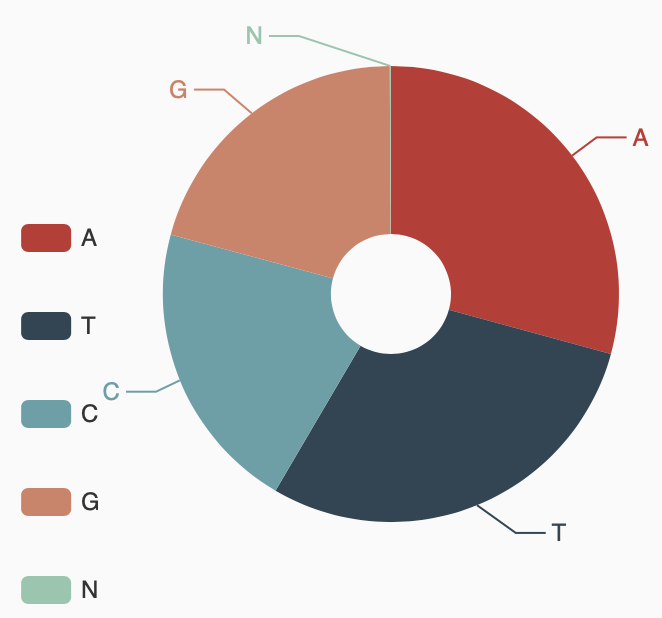
Grain Aphid genome A/T/G/C content statistics
Assembly evaluation-BUSCO assessment
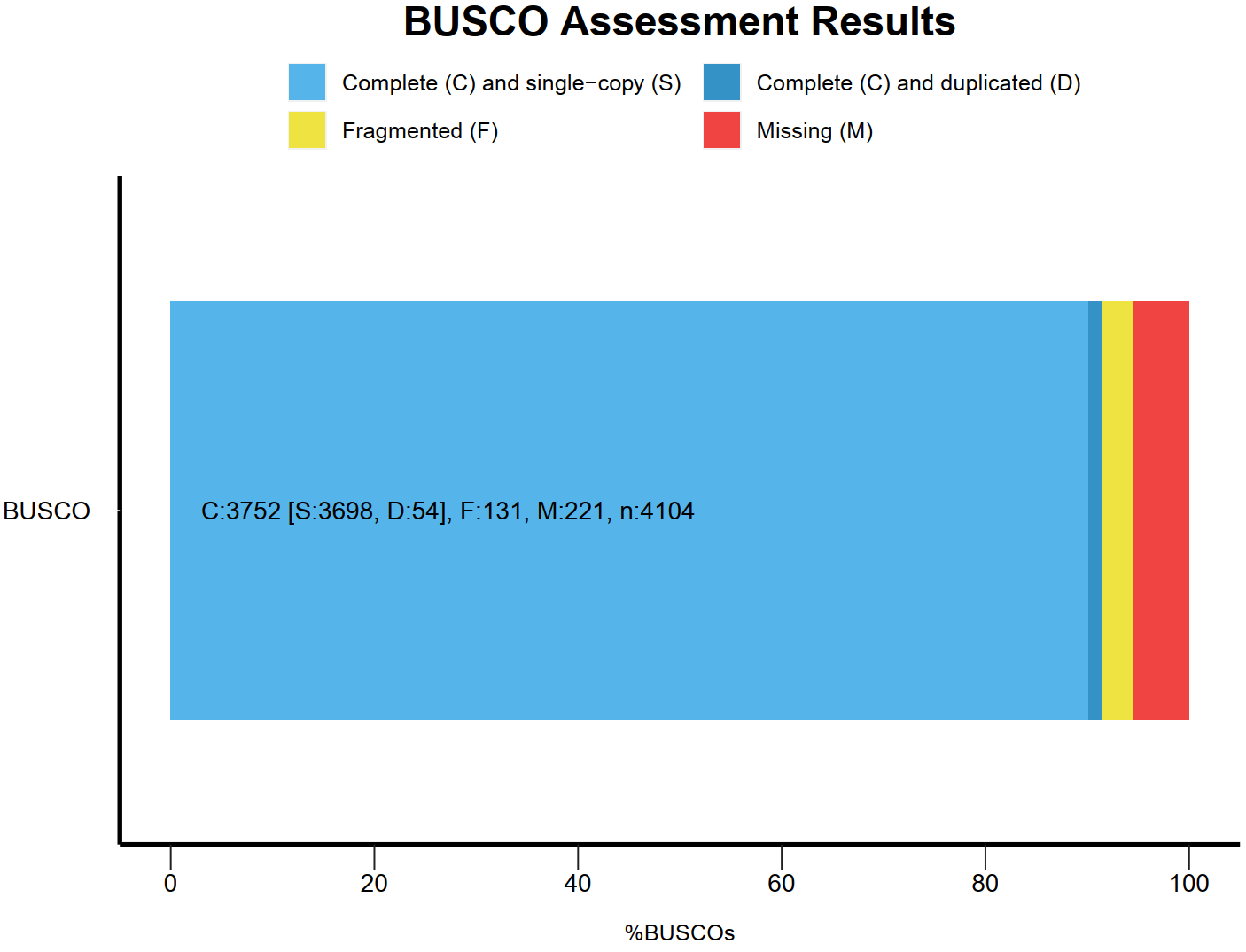
BUSCO assessment results
Note:C:Complete BUSCOs; S:Complete and single-copy BUSCOs; D:Complete Duplicated BUSCOs; F:Fragmented BUSCOs; M:Missing BUSCOs; n:Total BUSCO groups searched
Assembly evaluation- CEGMA assessment
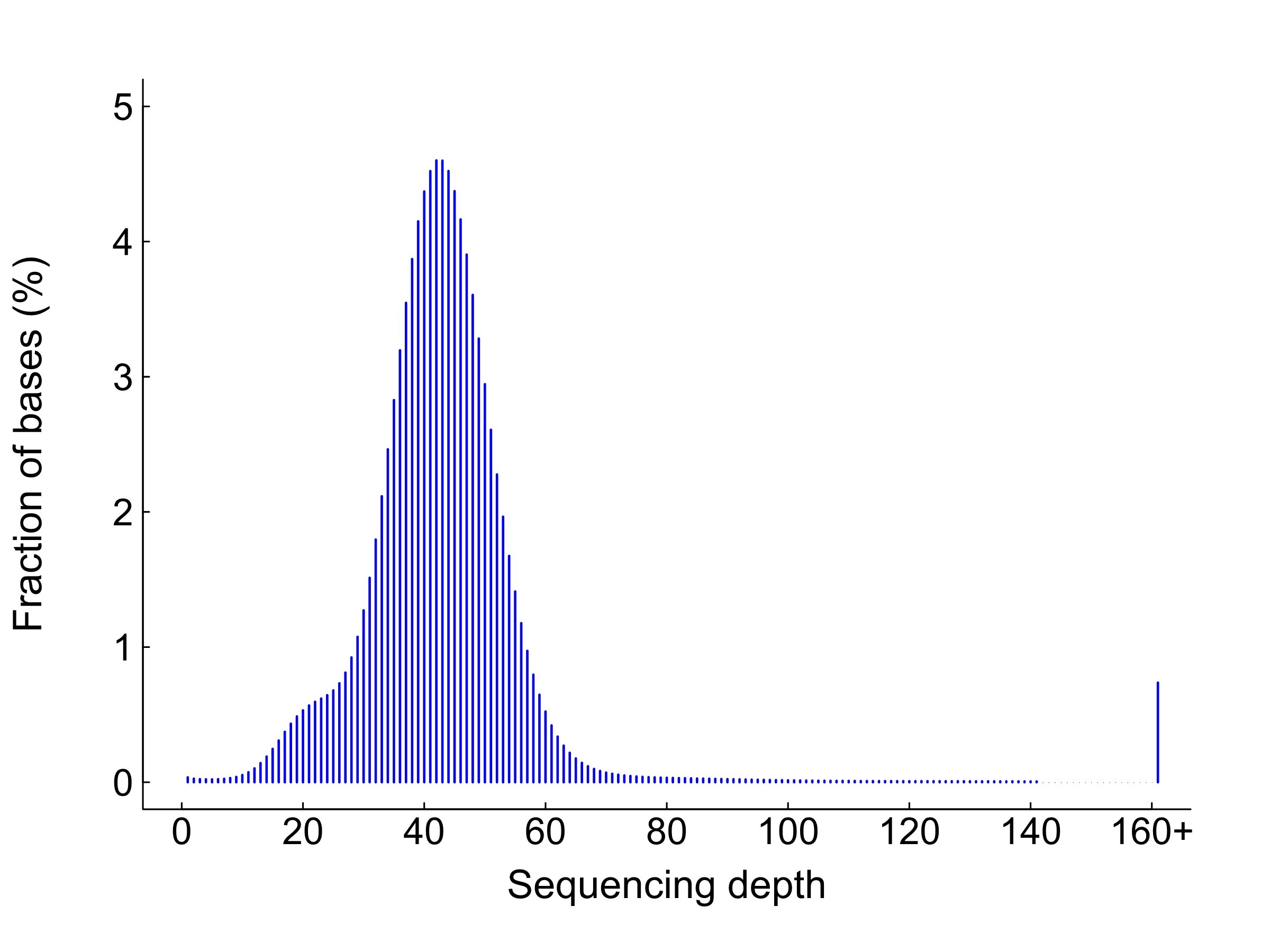
Sequencing depth distribution
Note:
X-axis: sequencing depth/X; y-axis, proportion of bases in the genome
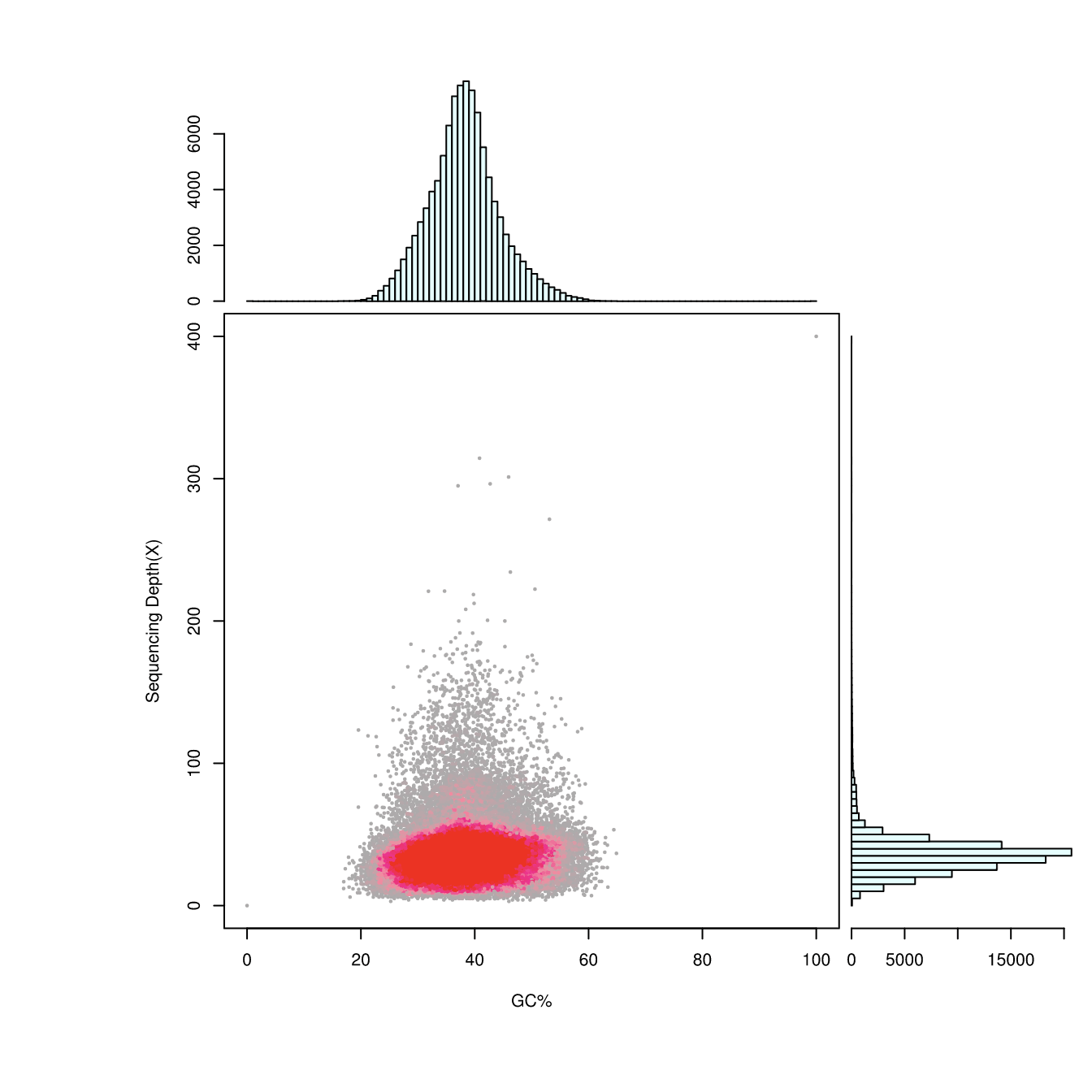
GC content and depth distribution
Note:
X-axis: GC contents; y-axis: sequencing depth.
Upper: GC content distribution. Lower right: sequencing depth distribution.
Genome Annotation
Structure prediction
Augustus, GlimmerHMM, SNAP, Geneid and Genscan are used in De novo gene structure prediction.
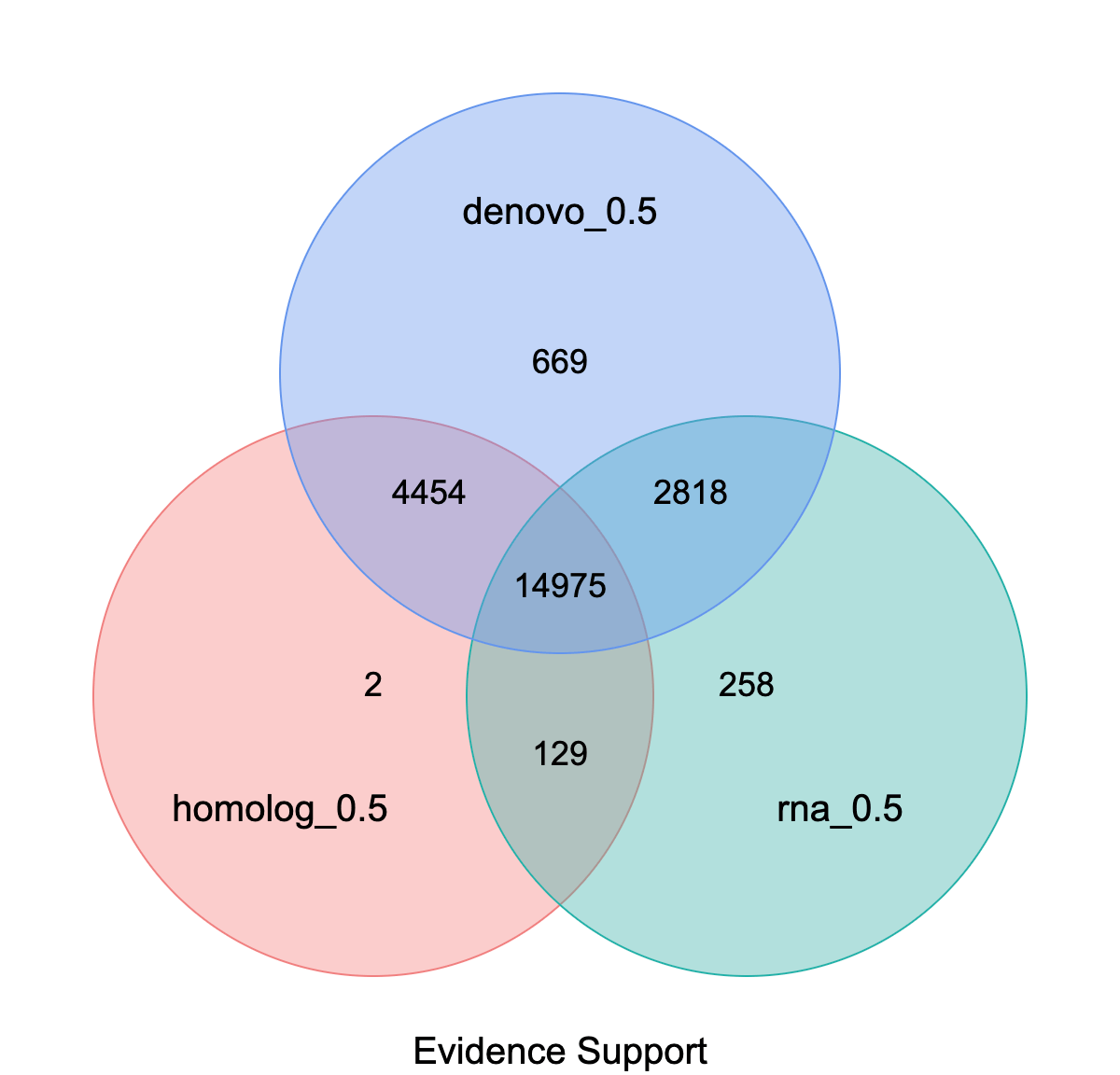
Venn diagram of gene set evidence support
Function prediction
Protein sequences predicted by gene structure are aligned with known protein databases. Results suggest that the function of 95.8% of the genes could be predicted.
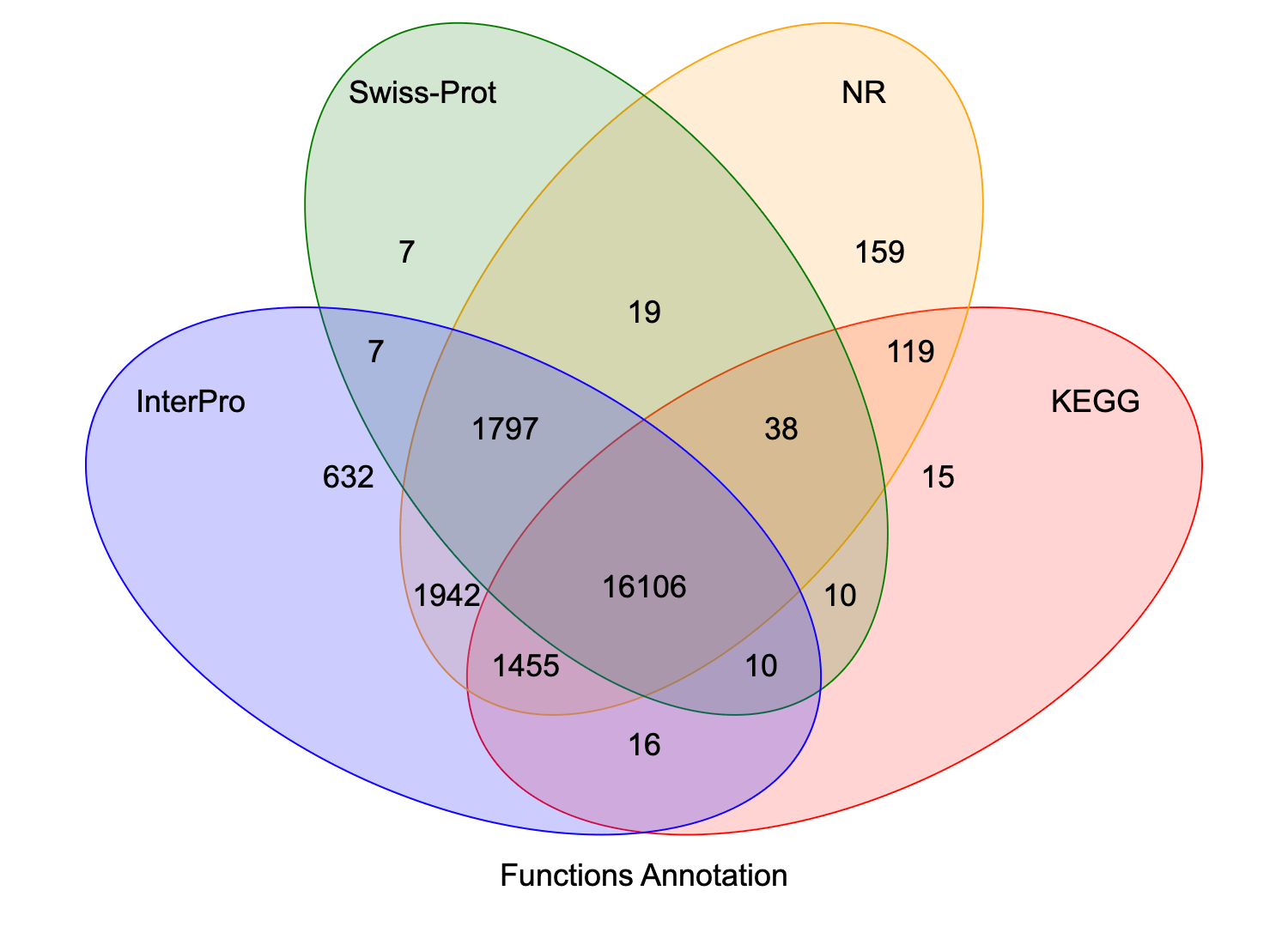
Venn diagram of gene function annotation
Short Read Sequencing
K-mer Analysis
Kmer=17analyses and genome size evaluation
| Kmer | Depth | n_kmer | Genome_size(M) | Revised Genome_size(M) | Heterozygous_rate(%) | Repeat_rate(%) |
| 17 | 67 | 203,660,880,738 | 3,039.71 | 3,020.12 | 0.46 | 60.41 |
Note:
(1)K-mer:Selected K-mer length.
(2)Depth:The expected value of K-mer depth.
(3)n_K-mer:The total number of K-mer from SOAPdenovo.
(4)Genome size(M):The genome size in Mb estimated by formula: Genome Size=K-mer_num/Peak_depth.
(5)Revise Genome size(M):Revised genome size after error correction from wrong K-mer.
(6)Heteozygous ratio:The percent of heteozygous positions.
(7)Repeat:Calculated by the percentage of K-mer numbers after 1.8-fold of the main peak of total K-mer numbers.
Note: The repeat here is a mathematically repeated sequence but not a repeat element with certain biological functions.
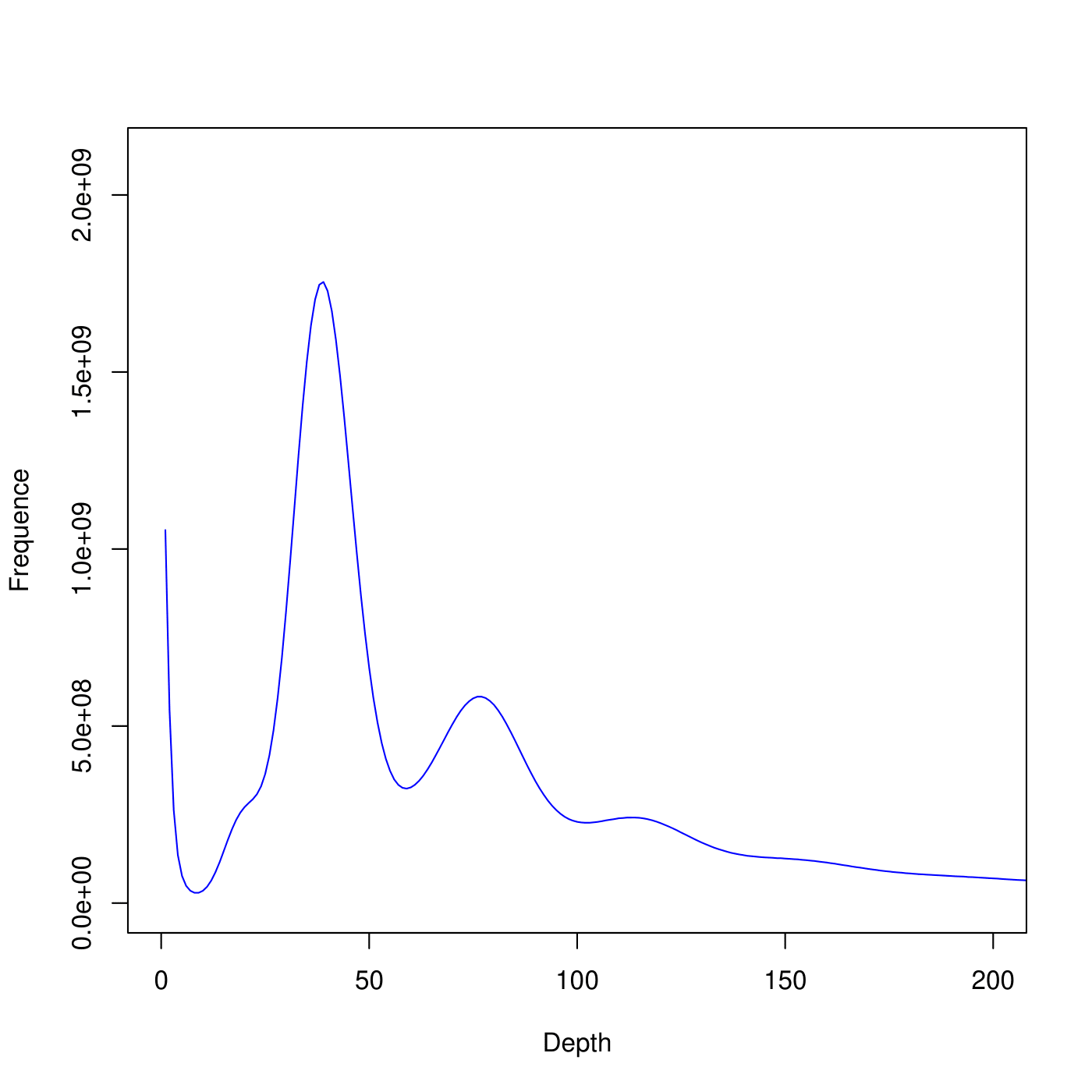
Distribution of K-mer number/type frequency and depth
Note:
X-coordinate is K-mer depth. Y-coordinate is the frequency of each K-mer depth.
*Please contact us to get the full demo report.
More Research Services
